1st Phrase of Heart Sutra(心经):
开 经 偈
Verse for Opening a Sutra
无 上 甚 深 微 妙 法
The unsurpassed; profound; wonderful Dharma/teaching,
百 千 万 劫 难 遭 遇
Is difficult to encounter in hundreds of millions of eons
我 今 见 闻 得 受 持
I now see and hear it, receive and uphold it
愿 解 如 来 真 实 义
And I vow to fathom the Buddha’s or Tathagata’s true meaning.
南 无 般 若 波 罗 密 多 心 经 (3x)
Homage to Prajna Paramita Heart Sutra
Sutra 经文:
*********************************
观 自 在 菩 萨 , 行 深 般 若 波 罗 蜜 多 时 ,
The Bodhisattva Avalokitesvara/GuanShiYin, while practicing the deep/profound course of Prajna(wisdom) Paramita(perfection),
*********************************************
Explanation:
=========
观自在菩萨=Avalokitesvara/GuanShiYin PuSa(Bodhisattva)
行=Practice/cultivate, 修行
深=deep/profound, is the opposite of superficial, 是对浅而言深
般 若=Prajna (in Sanskrit, an ancient Indian language); meaning Wisdom 智慧;
波罗蜜多=Paramita(also in Sanskrit, an ancient Indian language); meaning Perfection/completion, 到彼岸
时=At The Time. (at which time?, At The Time, when GuanShiYin PuSa IS practicing the Deep/Profound Prajna Paramita,)
*******************************************************************
Verse (From Master XuanHua):
Practice the Way, cultivate yourself, and do not search outside.
行道修身莫外寻
The prajna of your own nature is the deep and secret cause. .....
自性般若深密因
***************************************************************************
Commentary(By Master XuanHua):
The word practicing in the sutra is simply what we understand as cultivation. As to profound it is the opposite of superficial. Prajna means wisdom, and paramita means to reach the other shore. The text says that Bodhisattva Avalokiteshvara cultivates profound, not superficial, prajna.
What is profound and what is superficial?
*************************************************
观自在菩萨
现在讲这“观自在”,你笑,你观自在了吗?这观自在才可以笑;不观自在就不可以笑,要观自在了。“观自在菩萨”,“观”就是观想,“自在”就是一切一切都很快乐的,也无忧也无愁,也无挂也无碍。无挂碍就是观自在,有挂碍就不是观自在。
行深般若波罗蜜多时
“行”就是修行。“深”是对浅而言深。“般若”就是智慧。“波罗蜜多”就是到彼岸。“时”就是这个时候。这是说观自在菩萨他所修行的是深般若,不是浅般若。什么叫深般若?
For more explanation please refer to:
http://www.cttbusa.org/heartsutra/hs6.htm (in english英文)
http://www.drbachinese.org/online_reading/sutra_explanation/Heart/Heart_Sutra.htm (in chinese中文)
Just some Questions about the Heart Sutra:-)😊
Have you wonder WHY is it name as the Heart Sutra?
为什么叫"般若波罗蜜多心经"?
Also have you wonder WHY GuanShiYin PuSa choose to practice "The Deep/Profound Prajna(wisdom) Paramita", and not other type of Paramita?
At what age did the Buddha speaks the Heart Sutra?
Have you wonder who translated this Heart Sutra and when it is translated?
Amitofo😊🙏🌲🌳🌹阿弥陀佛; 感恩分享

家家阿弥陀,户户观世音
Showing posts with label 宣化上人. Show all posts
Showing posts with label 宣化上人. Show all posts
Saturday, March 19, 2016

Sunday, January 3, 2016
楞严经 - 七种经题
‘大佛顶,如来密因,修证了义,诸菩萨万行,首楞严。’这十九个字是这部经经名字,是一个题目,连下面的一个经字便成二十个字;前十九字属于‘别名’,后一字叫‘通名’。别名的意思是与其他经典有所分别,名字不同;下面的经字是相同的,因为相同,故叫通名,通名是通于诸经,别名是别于诸经,由于此部经与诸经不同,故有这通、别两种称法。
佛所说的经典,有七种立题,此七立题包括了如来所说三藏十二部一切经典,即是:单三、复三和具足。
单三是单用的有三种;
复三是双的,是两个意思在一起,也有三种;
具足一是说有一种是具足的意思。
单三是单用的有三种;
复三是双的,是两个意思在一起,也有三种;
具足一是说有一种是具足的意思。
单三之中有‘单人立题’,譬如‘佛说阿弥陀佛’。因为佛是人,阿弥陀佛也是人,故名;
有‘单法立题’,譬如‘大般涅槃经’,这就是单以法立出来的题目;
又有‘单喻立题’,譬如‘梵网经’,这部经比方大梵天王的网罗幢。这人、法、喻叫做‘单三立题’。
有‘单法立题’,譬如‘大般涅槃经’,这就是单以法立出来的题目;
又有‘单喻立题’,譬如‘梵网经’,这部经比方大梵天王的网罗幢。这人、法、喻叫做‘单三立题’。
复三:有‘人法立题’,如‘文殊问般若经’,文殊是人,所问的般若是法,故称;
有‘人喻立题’,如‘如来师子吼经’,如来是人,师子吼是个比喻,意思是说:佛说法的时候有如狮子吼声那么雄伟;
又有‘法喻立题’,如‘妙法莲华经’,妙法是法,莲华是个比喻,故立此题。
有‘人喻立题’,如‘如来师子吼经’,如来是人,师子吼是个比喻,意思是说:佛说法的时候有如狮子吼声那么雄伟;
又有‘法喻立题’,如‘妙法莲华经’,妙法是法,莲华是个比喻,故立此题。
具足一:比如‘大方广佛华严经’,大方广是法,佛是人,华严是比喻,这部经比喻万行的因花,庄严无上果德,此题具足人、法、喻故名。
凡是讲经者,对这七种立题都需要明白清楚,才可讲解经典,如果连七种立题都不明白,又怎样能教人家明白呢?比如:自己都不能觉悟,又怎能教人觉悟呢?这一点是很要紧的。假如连七种立题、五重玄义、十门分别都不先明白,就自称法师,到处说法,于是把一般人都讲到地狱里去了,连他自己也到地狱去了,这还不要紧,但听的人却连他们为什么会到地狱都不知道,这实在是很可怜的。因此,学佛的人必须真正懂得佛法,真正有了智慧,然后才去教化众生,这才不会出错。
http://boruo.goodweb.cn/books2/1329.htm
http://boruo.goodweb.cn/books2/1329.htm
Sunday, November 22, 2015
Friday, November 20, 2015
medicine buddha mantra meaning 药师佛咒
medicine buddha mantra meaning
藥師佛咒
nā mó
南 謨 (= 皈依/敬禮)
Namo (=Homeage/Respect/taking refuge)
bó qié fá dì。
薄 伽 伐 帝。(=世尊)
Bhagavate. (=divine/world Honored One)
pí shā shè
鞞 殺 社, (= 藥)
Bhaiṣajya (-Medicine/Healing)
jù lǔ
窶嚕 (=師)
guru (=Teacher/Master)
bì liú lí
薛 琉 璃. (=琉 璃)
vaiḍūrya (=crystal/pure)
bō lá pó
鉢 喇 婆。(=光)
prabha (=Light)
hé là shé yě。
喝 啰 闍 也。 (=王)
rājāya (=prince/king/royal)
dá tuō jiē duō yě。
怛 他 揭 多 也。(=如來)
tathāgatāya (=Buddha)
ā là hē dì。
阿 啰 喝 帝。 (=應)
arhate (=perfect being)
sān miǎo sān bó tuó yě。
三 藐 三 勃 陀 耶。 (=正等覺)
samyaksambuddhāya (=perfectly enlightened)
dá zhí tuō。
怛 侄 他。 (=即說咒曰)
tadyathā: (=do it like this/Thus)
om。
唵。(=唵)
Oṃ. (=Om)
pí shā shì。
鞞 殺 逝。(=身药)
bhaiṣajye (=healing/medicine for *body)
pí shā shì。
鞞 殺 逝。(= 语药)
bhaiṣajye (=healing/medicine for *speech/mouth)
pí shā shè。
鞞 殺 社。(=意药)
bhaiṣajya (=healing/medicine for *mind)
sān mó jiē dì
三 沒 揭 帝 (=自度度他)
samudgate (=lets heal oneself and other and heal together)
suō hē。
莎訶 (=圆满达成)
Svaha (=so it is/ this is it. well done!)
http://www.liaotuo.org/fozhou/yaoshizhou/42873.html
****************************
The meaning of Om
「唵」字,翻译过来叫「本母」「咒母」「佛母」;众生的心,具足本母的这种智慧,以这种咒的力量,能生出来十种的法门。这十种的法门:
1.「字」2.「句」 3.「观」4.「智」5.「行」6.「愿」7.「依教奉行」8.「理」9.「因」10.「果」
From 一九六九年宣化上人讲于美国加州旧金山佛教讲堂.
http://www.fomen123.com/fo/jingdian/dabeijing/dabeizhou/6870.html
藥師佛咒
nā mó
南 謨 (= 皈依/敬禮)
Namo (=Homeage/Respect/taking refuge)
bó qié fá dì。
薄 伽 伐 帝。(=世尊)
Bhagavate. (=divine/world Honored One)
pí shā shè
鞞 殺 社, (= 藥)
Bhaiṣajya (-Medicine/Healing)
jù lǔ
窶嚕 (=師)
guru (=Teacher/Master)
bì liú lí
薛 琉 璃. (=琉 璃)
vaiḍūrya (=crystal/pure)
bō lá pó
鉢 喇 婆。(=光)
prabha (=Light)
hé là shé yě。
喝 啰 闍 也。 (=王)
rājāya (=prince/king/royal)
dá tuō jiē duō yě。
怛 他 揭 多 也。(=如來)
tathāgatāya (=Buddha)
ā là hē dì。
阿 啰 喝 帝。 (=應)
arhate (=perfect being)
sān miǎo sān bó tuó yě。
三 藐 三 勃 陀 耶。 (=正等覺)
samyaksambuddhāya (=perfectly enlightened)
dá zhí tuō。
怛 侄 他。 (=即說咒曰)
tadyathā: (=do it like this/Thus)
om。
唵。(=唵)
Oṃ. (=Om)
pí shā shì。
鞞 殺 逝。(=身药)
bhaiṣajye (=healing/medicine for *body)
pí shā shì。
鞞 殺 逝。(= 语药)
bhaiṣajye (=healing/medicine for *speech/mouth)
pí shā shè。
鞞 殺 社。(=意药)
bhaiṣajya (=healing/medicine for *mind)
sān mó jiē dì
三 沒 揭 帝 (=自度度他)
samudgate (=lets heal oneself and other and heal together)
suō hē。
莎訶 (=圆满达成)
Svaha (=so it is/ this is it. well done!)
http://www.liaotuo.org/fozhou/yaoshizhou/42873.html
****************************
The meaning of Om
「唵」字,翻译过来叫「本母」「咒母」「佛母」;众生的心,具足本母的这种智慧,以这种咒的力量,能生出来十种的法门。这十种的法门:
1.「字」2.「句」 3.「观」4.「智」5.「行」6.「愿」7.「依教奉行」8.「理」9.「因」10.「果」
From 一九六九年宣化上人讲于美国加州旧金山佛教讲堂.
http://www.fomen123.com/fo/jingdian/dabeijing/dabeizhou/6870.html
Tuesday, August 11, 2015
要是诵持《楞严咒》,有了功夫,有了受用,那么八万四千金刚藏菩萨和他的徒弟眷属,就都常常随从保护着你
在《楞严经》上说:你要是诵持《楞严咒》,有了功夫,有了受用,那么八万四千金刚藏菩萨和他的徒弟眷属,就都常常随从保护着你,令你遂心满愿。纵然魔王想找一个漏洞,想来找你的麻烦也没法子。
在过去五祖弘忍大师在湖北东山那个地方修行,他戒行精严,修行也特别认真。
有一次土匪把这个城围上,弘忍大师忍不住了,就想要救这个城里头的老百姓,于是乎他就下山了,从东山那个地方到湖北城里去。土匪一见弘忍大师来了,就吓得丢盔卸甲望影而逃,为什么这样子呢?因为弘忍大师虽然是一个人下山来的,可是土匪看到完全是穿金盔金甲的天兵天将,就好像从天上下来的天神一样,都穿着金盔金甲,手里拿着宝剑威武奇扬的。土匪一见到这样的情形就吓得望影而逃,不用一刀、一枪、一箭,他们就撤退了。
这是因为弘忍大师他诵持《楞严咒》,所以土匪一见着弘忍大师就吓得跑了,这就是有真正的功夫才能这样子,若没有真正的功夫,怎么会有这样的感应道交。
http://www.xuefo.net/nr/article7/74128.html
在过去五祖弘忍大师在湖北东山那个地方修行,他戒行精严,修行也特别认真。
有一次土匪把这个城围上,弘忍大师忍不住了,就想要救这个城里头的老百姓,于是乎他就下山了,从东山那个地方到湖北城里去。土匪一见弘忍大师来了,就吓得丢盔卸甲望影而逃,为什么这样子呢?因为弘忍大师虽然是一个人下山来的,可是土匪看到完全是穿金盔金甲的天兵天将,就好像从天上下来的天神一样,都穿着金盔金甲,手里拿着宝剑威武奇扬的。土匪一见到这样的情形就吓得望影而逃,不用一刀、一枪、一箭,他们就撤退了。
这是因为弘忍大师他诵持《楞严咒》,所以土匪一见着弘忍大师就吓得跑了,这就是有真正的功夫才能这样子,若没有真正的功夫,怎么会有这样的感应道交。
http://www.xuefo.net/nr/article7/74128.html
Monday, August 10, 2015
释迦牟尼佛为了保护我们现在所有一切初发心的学道人,所以宣示《楞严咒》
因为释迦牟尼佛为了保护我们现在所有一切初发心的学道人,所以宣示《楞严咒》,来帮助我们得到定力,令我们身心泰然,没有什么麻烦。所以我们时时刻刻不要忘了这个法,我们若能诚心专一诵持《楞严咒》,就是绍隆佛法,就是正法住世。
http://www.xuefo.net/nr/article7/74128.html
http://www.xuefo.net/nr/article7/74128.html
Wednesday, February 26, 2014
达摩祖师西来意 The Intention of Patriarch Bodhidharma’s Coming from the West
Link: http://read.goodweb.cn/news/news_more.asp?lm2=2399
达摩祖师西来意
达摩祖师西来意
The Intention of Patriarch Bodhidharma’s Coming from the West
上宣下化老和尚讲述
by the Venerable Master Hsuan Hua
Preface
前言
Originally I came to this land To transmit Dharma and save deluded beings. One flower, blooming with five petals,Will bear fruit naturally.
我本来兹土 传法度迷情
一华开五叶 结果自然成
我本来兹土 传法度迷情
一华开五叶 结果自然成
I have often told you that when Patriarch Bodhidharma first went to China, he found it truly difficult to convert the Chinese people.
我常对你们讲,达摩祖师到中国时,那真是啊!很不容易教化中国人。
目录
Friday, June 14, 2013
世界坏的根本 The Basic Cause Of The Worlds Demise
Link from: http://read.goodweb.cn/news/news_view.asp?newsid=59289
我们学佛的人,不要好奇,不要好高骛远,平常心是道。人法地,地法天,天法道,道法自然。你勉强做出什么事情来,都与道不相应的。所以我们无论做什么事,最好是任运而行,不加造作。有的人学佛学了一辈子,贪心比谁都大,我也不知道他是学的什么佛。学佛,一切时,一切处,一切事,都要任运而行,不勉强,不要存着一种贪心,不要争心,不要在那儿学佛,学来学去总是有所求;也不要自私,也不要自利,最要紧不打妄语。我们人若能不打妄语,这诚实的根就扎下去了。
有父母的人好好孝顺父母,有兄弟的家庭要和气,不要争吵,一争吵就没有家庭的温暖和快乐了。你们看一看,现在全世界,每一个国家,每一个家庭都坏了。家庭分崩离析,不能和乐相处。「男女居室,人之大伦」,可是你要安于室,不安于室,就是天天争争吵吵的,虽然有家庭,可是没有家庭的温暖和快乐。
这个温暖快乐并不是说不知足。有的家庭互相不满意,不知足,说我怎么生到这么一个家庭?就有一股怨气,怨天尤人,就搞得夫妇离婚了。所谓「父不父,子不子,妻不妻」,家庭没有一天和气的时候,整天吵吵闲闲。这样一来,就离心离德,然后就离婚了。你看看全世界现在离婚的人有多少?离婚的比结婚的人还多。离婚不要紧,却把整个世界每一个国家都破坏了。你看这个世界坏的开始,追源祸始就是从夫妇不和气来的,因此造成天地灾祸都发生了。
天地为什么有天灾人祸?就因为离婚的人太多了。这些离婚的人,家庭都破碎了
,生孩子也不会教育出有用的人才。家庭破碎,子女也都变成问题儿童了。这个孤儿、孤女,没有爸爸妈妈的在在皆是。小孩子这么无拘无束,没有一种教育的方法来教育他,所以他就杀人、放火、贩毒,无所不为了。这样一来,国家也不像个国了,世界也都不像一个世界了。这追源祸始,就是夫妇不懂得治理家庭的业务,常常闹离婚,所以这些问题都来了。
天灾人祸,好像飓风、地震、水灾、火灾,这种种不一而足,瘟疫流行、战争,什么灾难都不知不觉就发生了。甚至于飞机失事、火车撞车、船在海上航行就沉了
,淹死不知多少人,伤了不知多少人,这个祸源都是因为离婚,因为这个造成的。离婚,这是阴阳错乱,阴阳错乱就一切一切都不顺利,不正常了。
所以你们各位想要知道世界怎么不好的,你要追源溯本,研究研究是从什么地方坏起来的-就是从夫妇间不和谐,不能相敬如宾,不能举案齐眉。现在人都说自由,你讲自由啊,就越来越不像人了,人都不如畜生了,所以这个时代就坏了。各位要深深明白这一点!不是学佛学了几十年,学了一辈子,找不出世界坏的根本。
这个夫妇间一坏,你这一争吵,往上来说,就是不孝顺父母,不忠于国。往下来说,生的子女都是一些有问题的儿童。往上也坏了,往下也坏了,这都是有连带关系的。你们各位学佛的人,要真正懂得这个世界从什么地方坏的?从外面来说,就是从夫妇那儿坏的:往里边来说,就是从人心那儿坏的。人心一坏了,外边就都不正常了,都不符合规矩了。你无论到哪个地方,你可以观察观察,看一看:家庭若不好,吵吵闹闹的,社会也不会安定,国家也不会出人才了。你们每一个人都有什么意见,我不知道我说的话,你们认为有没有一点道理?
Those of you who have parents at home should show them filial respect.
Families where siblings dwell together must live in harmony, and not fight among
yourselves. Once you start to quarrel, the family loses its atmosphere of warmth
and happiness. Look around us: families in every country of the world are
falling apart! Families split up and go their separate ways, people no longer
get along peacefully and happily. The ancients said,
We should however, be satisfied with our family and not be discontented;
otherwise, you will quarrel everyday. A family like this, although it exists,
lacks an atmosphere of warmth and happiness. This feeling of kinship and joy
does not permit us to be discontented. In some families, people feel always
dissatisfied, and discontent with each other. They ask, "Why was I born into
such a family!" There is an atmosphere of enmity at home. Then people blame
others for their problems, until finally the husband and wife get a divorce. In
this way the situation becomes
There is no peace in the home then, not even for a single moment. The
family fights day and night. The marriage of people who don't share the same
mind or the same resolve will soon fall apart. Do you realize how many people
are getting divorced these days? There are many more of them than married
people. Divorce itself is bad enough, but the consequences of divorce are
destroying every country in the world. The source of the destruction of the
world lies in disharmony between married couples, which then brings about all of
the disasters that we experience.
Natural disasters and calamities, such as hurricanes, earthquakes, floods,
fires, epidemic plagues, and wars will start to occur more and more frequently.
Furthermore, countless numbers of people will drown or be injured in airplane
crashes, train collisions, and the shipwrecks. The cause for all these
calamities is divorce between couples. Once people get divorced, Yin and Yang in
the world fall into disorder. Then nothing goes smoothly any longer, and the
world gets out of shape.
So if we want to understand what turned the world bad, we have to
investigate its source. We have to search for the place where it went wrong. The
answer is the disharmony among married couples. We failed to respect each other
and forgot all about the proper courtesy between husband and wife. People these
days talk about freedom, but the more we demand liberation, the farther our
behavior strays from the standards for humans. It gets to the point, where
people are no better than animals. Therefore, the age has gone bad. All of you
must clearly understand this point! It shouldn't be the case after you study
Buddhism for several tens of years or for all your life, you still can't find
the root cause for the corruption of this world.
When the relationship between husband and wife goes wrong, seen from above,
it's due to a lack of filial respect for parents. Because of quarreling and
fighting, we are unable to truly be filial to our parents nor steadfast in
service to our country. Seen from below, the children that come from quarreling
families all become troubled adolescents. The damage brought on above leads to
damage in the next generation, so the problem is inter-related.
All you Buddhists, to really understand where the world goes bad, you
should know that externally, things turn bad first between husband and wife.
Internally, the problem begins with our bad minds. If the minds of people are
rotten, then the outside environment grows abnormal, and does not accord with
the rules. You can take a look around wherever you go to see if this is true--if
a family is out of order, and full of conflict, the society won't be peaceful,
and the country will not bring forth any talented people or people of worth.
Does anyone have a comment? I don't know whether you feel that what I said makes
any sense or not.
世界坏的根本
THE BASIC CAUSE OF THE WORLD'S DEMISE
宣公上人一九九三年八月二十二日开示于法界佛教总会总办事处
Venerable Master Hua's Talk on August 22, 1993
at the Administrative Headquaters of Dharma Realm Buddhist
Association
法喜 记录 Transcribed by Dharma of Bliss
We disciples of the Buddha must not crave new experiences, nor be overly
curious and always seeking for the unusual and the unobtainable. The ancients
said,
"The ordinary, every-day mind is the Way."
They also said that,
"People follow the Earth, the Earth follows Heaven.
Heaven follows the Way, the Way follows Nature."
Anything, done in a forced manner, will not bring a response with the Way.
Therefore, no matter what we do, it is better to let things take their own
course, and not be artificial and pretentious. Some people may have been
studying Buddhism all their lives, but their greed is greater than anyone
else's. I don't know what kind of Buddhism they have been learning. As
Buddhists, at all times and places, and no matter what we do, we should let
events take their own course, and not be contrived or artificial. We must not be
greedy or contentious. We shouldn't always be seeking things while we study
Buddhism. Neither must we be selfish, nor after self-benefit. Above all, we must
not lie. If we can avoid telling lies, we are planting down the roots of
sincerity.
"Man and woman together form the
fundamental relationship among humans.
"Fathers don't resemble fathers, and sons don't act like sons; wives do not
act like wives any longer. "
Why do these natural disasters and calamities occur? Simply because there
are too many divorcees filling the world. A divorce breaks up the family and the
children who come from these families can easily become "troubled adolescents."
These youngsters lack a mother and father at home, and thus they have no way to
learn to become productive and stable in society. Children with single parents
or without parents are pervasive now in the world.
Such children grow up unrestrained, and because there is no way to teach
them properly, they learn to kill people, destroy property, and take drugs and
act out their every selfish desire. In this way, the nation can no longer
resemble a nation, and the world is no longer like a world. After you
investigate the cause of this phenomenon, you will see that because married
couples don't know how to manage their family business and think only of getting
divorced when problems arise.
阎罗王的五封信 King Yama's Five Letters
Link from: http://read.goodweb.cn/news/news_view.asp?newsid=59300
他说:「是啊!喔,这是第四封信给我啊,我,啊!这个字我都不认识,我不懂阎罗王这就是信。」
于是乎阎罗王说:「这回你还有话讲没有?」
他自己一想,果然小孩子一出生就死了,这令自己要觉悟,这也对的。牙也掉了,眼睛也花了,耳朵也聋了,这是给自己送信来的。
又问:「那么最后一封信是什么呢?」
答:「最后一封信哪,我叫,你这,你看见你头发都白了没有啊?」
他说:「看见。喔!这是最后一封信!?」
于是乎这个人也没话讲了。
阎罗王说:「你吃了这么多肉,好了,投生去做猪去啰!」
这回,于是乎他就去做猪了。那么究竟什么时候再回来再做人呢?这就是任何人也不知道的。
King Yama said to the guy: "I have sent you several letters already, you
just didn't realize that."
The guy said: "I never received any of your letters."
The King said: "My first letter to you was about your neighbor's child, the
child died right after birth. That was my first letter to you. You are quite
senior, but that child was dead right after birth, you should have ! You should
have realized! You should have cultivated! You should have practiced the
Way!"
The guy said: "Oh! That was the first letter?! Then what about the second
letter?"
King Yama said: "The second letter? About your eyes, wasn't there a time
when your eyes got a little blurrier and you couldn't see very well?"
The guy said: "Yeah!"
The King said: "Right. That was the second letter."
The guy asked: "What about the third letter?"
The king answered: "Wasn't there a time when your ears got a little
deafer?"
The guys said: "That's right." That was the third letter.
The guy asked: "What about the fourth letter then?"
The king answered: "About the fourth letter, didn't all your teeth fall
out?"
The guy said: "Yeah. Oh, that was the fourth letter to me?! I, ow, I
couldn't read a word, I didn't know this was what you meant letters."
Then King Yama said: "Do you have anything more to say this time?"
The guy thought about it for a while: It was true that the child died
right after his birth. It was meant to make me realize. It was also true that
the my teeth fell out, the eyes got blurrier and the ears had gone deafer. All
of these were the letters to me.
Then the guy asked again: "What about the last letter?"
The King said: "In the last letter, I told you to see if your hair was
gray."
The guy said: "I saw it! Oh, that was the last letter?" Then the guy had
nothing else to say.
King Yama said: "Since you have eaten so much meat, well then, go
reincarnate as a pig!"
This time, the guy was reincarnated as a pig. When will he ever be
reincarnated back as a human again? Nobody knows.
<<录自楞严经卷四 From Suramgama Sutra, Book 4>>
有一个人哪,死到阎罗王那儿去,死了去见阎罗王。见阎罗王,他就向阎罗王来辩护啊,来说阎罗王不对。
他说:「你啊!(指阎罗王)你真不通人情,你一点都不懂人情。你叫我来见你,你应该给我一封信呀!然后告诉我、让我明白,你再把我叫来呀,我好有个准备。你连一个电报、一封信、一个电话,也不也不通知我,你就把我捉来了,啊!你太没有道理了。」
阎罗王就对他讲了,说:「我给你好几封信了,你也不知道。」
他说:「我没有收到你的信呀!」
阎罗王说:「我给你的第一封信,是你邻居有一个小孩子,一生出来就死了,这是我给你一第一封信。你这么大年纪了,那个小孩子一生出来就死了,你应该觉悟啊!应该修行啊!应该修道啊!」
他说:「喔!那就是第一封信吗?那么第二封信呢?」
阎罗王说:「第二封信哪?你眼睛,有一个时期是不是花了?看东西看得不清楚了?」
他说:「是啊。」
答:「对,这是第二封信。」
问:「第三封信呢?」
答:「你耳朵是不是有一个时候就聋了?」
他说:「不错啊!」这是第三封信。
问:「那么第四封信呢?」
说:「第四封信哪,你的牙是不是都掉了?」
There was a man who died and went to see King Yama. When he saw King
Yama, he protested to the king about his unfairness.
He said: "You (the King) are so unreasonable, you don't understand about
reasonableness at all. You simply called to see me. But you should have sent
me a letter first. You could gradually tell me and make me realize it, then you
would call upon me and let me have a chance to prepare myself. You didn't send
me a telegram, a letter, or even a phone call, you just snatched me here. You
are just too unreasonable."
宣化上人:什么是观世音菩萨

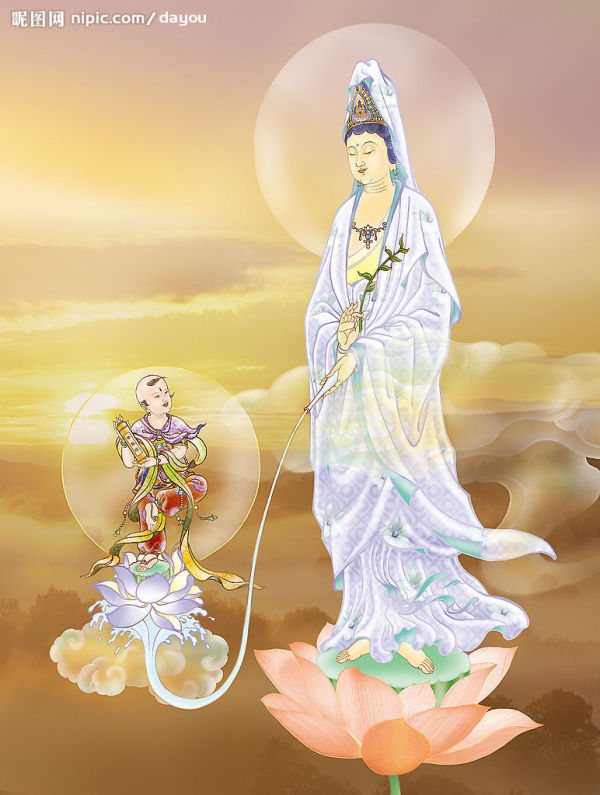
观世音菩萨在佛教里,是占很重要的地位的。这观世音菩萨,有的人说他是中国的,有的人说他是外国的;有的人又说他是男人,有的人又说他是女人。
观音菩萨妙难酬 清净庄严累劫修
朵朵红莲安足下 弯弯秋月锁眉头
瓶中甘露常遍洒 手内杨枝不计秋
千处祈求千处应 苦海常作渡人舟
Wednesday, June 12, 2013
宣化上人:孔子老子皆是佛菩萨化身
Link from: http://www.xuefo.net/nr/article15/150379.html
佛教和儒教所不同的地方是,一个提倡世间法,一个是出世法。可是出世法是由世间法而达到的,并不是离开世间法而有出世法。
孔子是中国空前绝后的大圣人,是先知先觉者,他有相当的来历。孔子为什么生在中国?本来孔子前生是佛教里边的水月童子,也就像善财童子一样;而中国的老子,道教的祖师,就是佛教老迦叶的化身;颜回呢,就是佛教里头的明月儒童化身。
为什么迦叶祖师化身成老子?为什么水月童子化身做为孔子?为什么明月儒童化身成颜回?这就是因为佛教大乘根性的因缘到了中国,所以这一班佛教的菩萨就争先恐后地到中国,为的就是给佛教开路。他们把佛教的马路先修好了,那么等佛教传到中国,这一些大乘根性的人就容易接受。不然,佛教传到中国时,一般人也没有学道教,也没有学儒教,那么佛教很高深,没有人懂,也没有人接受,是很费力的。
于是老迦叶也不辞辛苦,先到中国化身做老子。怎么叫老子呢?因为他一出生头发也白了,胡子也白了,一出生已经就老了,所以叫老子。老子姓李名耳字老聃,他到中国来,不断地努力提倡道教,而不说是佛教。
水月童子呢,就提倡儒教,就这么开了两条平坦的道。所以等到以后佛教传到中国,就水到渠成,很多人都接受佛教的道理。
中国的儒教就譬如小学的学生刚刚入学门,所研究的都是小孩子容易懂的道理;那么以后就升到中学,中国道教的道理就譬如中学的课程;中学读完了,就要读大学,那么佛教的课程就是大学的课程,所以儒、释、道三教是三而一,一而三。小学是为中学预备的,中学是为大学预备的,大学是为所有想要深造学问的老百姓而预备的,所以有小学、中学、大学,佛教可以说是尽虚空遍法界的一所大学。
虽然这所大学在这儿,但不一定每一个人都能进大学,还有很多人连字都不认识的,所以有很多人不认识佛教,不知道佛教是什么,也就是这个原因,因为虽有小学也有中学,可是所有的小孩子不一定都能进得小学,所有该读中学程度的学生,也不一定完全会进中学,也是这个道理。
所以在中国来讲,儒教是小学的课程,其它的宗教可以说都是中学的课程,而佛教是包罗万有,无所不包、无所不容,所以说尽虚空遍法界都是佛教的大学。那么其中不认字的人、不能进大学、不能进中学、不能进小学的人还是很多。
儒教的孔子也有五眼六通,他也具足相当的智能,智能渊博,所以孔子出生的时候有麟吐玉书的祥瑞之相。孔子说:“吾十有五而志于学”,他说我十五岁的时候,就立志要学习了生脱死的法,可是虽然有这个志气,还没有真正下决心。“三十而立”,等到三十岁时,才下了决心,一定要修行了。“四十而不惑”,等到四十岁的时候,他一切的怀疑、疑惑、迷惑都断了,所以说不惑。不惑就是不动心了,也就是孟子说他四十不动心一样的道理。什么事情不动心?财、色、名、食、睡不动心了。财,他也不贪,适可而止;色,他也不贪;名,他也不贪;食,好东西他也不贪;睡,也不贪睡觉。不惑,也就是不迷惑了,般若智能现前了。“五十而知天命”,等到孔子五十岁,真正得到宿命通了。这个天命也就是宿命通,他能知道做人的生命哲学是什么;也知道人的宿命——人的过去生是怎么回事。“六十而耳顺”,等到六十岁时,他有耳顺的功夫了。耳顺,在一般世俗人所讲,可以说是有天眼通、天耳通了。一般世俗人说千里眼、顺风耳,也就是天耳、天眼的作用。“七十而从心所欲”,等到七十岁了,他得到了漏尽通。得到漏尽通,那么这时他的工作完成了。
他为了把佛教的路给铺好,所以要讲忠、孝、仁、爱、信、义、和、平这八德;又讲格物致知、诚意正心、修身齐家、治国平天下这八条目;又讲明德、新民、止于至善这三纲领,把佛教的路给开了一半。格物,什么叫格物?我们一般老学究、老读书人都懂的,就是要把自己的物欲革去,革除你的习气毛病,你的妄想。这物欲就包括你的嗜好,包括你所放不下的东西,这些都是一个欲,都要革除去。你能革除物欲,然后你的智能才能开朗,才能现前,所以要致知。致知又要诚意;你诚意了,然后就正心;你能正心,然后修身。你心若不正,身就不能修,意若不诚,心也不能正,这是一套的,一步一步的。身修,然后家也齐、国也治,这就是孔子讲的格物致知、诚意正心、修身齐家、治国平天下,这八条目可以说包括世间法和出世法的意义。
不过儒家只知道世间法,而不注重出世法,所以它是个小学;它讲五伦八德,兄弟父母祖有五伦,八德就是忠孝仁爱信义和平,这就把佛教的路给铺了一半。道教呢,又把佛教的路铺了一半;道教就叫人去欲断爱,不过没有像佛教说的那么肯定,道教说:
“夫人神好清,而心扰之;人心好静,而欲牵之。常能遣其欲,而心自静;澄其心,而神自清。自然六欲不生,三毒消灭。所以不能者,为心未澄,欲未遣也。能遣之者,内观其心,心无其心;外观其形,形无其形;远观其物,物无其物。三者既无,惟见于空。观空亦空,空无所空;所空既无,无无亦无;无无既无,湛然常寂;寂无所寂,欲岂能生?欲既不生,即是真静。”
“夫人神好清,而心扰之”,人的这个神是好清净的,可是人这个心就不老实,像只马猴,跳上跳下,向南跑向北跑,所以说“心马意猿猴”,心像匹马,意像只猿猴,它是不老实的。“人心好静,而欲牵之”,人这个心是好清净的,可是欲念在那儿牵着它,叫它不清净。
“常能遣其欲,而心自静;澄其心,而神自清”,自然就六欲不生、三毒消灭。“所以不能者,为心未澄,欲未遣也。能遣之者,内观其心,心无其心;外观其形,形无其形;远观其物,物无其物。三者既无,惟见于空。观空亦空,空无所空;所空既无,无无亦无;无无既无,湛然常寂;寂无所寂,欲岂能生?”等到这个“寂无所寂”了,欲岂能生?你清净到极点,澄清到极点了,自然就没有欲了。“欲既不生,即是真静”,这就是一个真正的清净。
佛教和儒教所不同的地方是,一个提倡世间法,一个是出世法,这出世法是由世间法而达到出世法,并不是离开世间法而有出世法。一般人都赞叹孔子,无论是他的学生也好,或是一般的社会人士也好,都说他德配天地、道贯古今,诸子百家,无所不通,博学多能,学的也多,能力也广。所以各位学佛法的人,先要把道教、儒教的道理也弄通了,然后你对佛法的道理,自然就迎刃而解。
佛教和儒教所不同的地方是,一个提倡世间法,一个是出世法。可是出世法是由世间法而达到的,并不是离开世间法而有出世法。
孔子是中国空前绝后的大圣人,是先知先觉者,他有相当的来历。孔子为什么生在中国?本来孔子前生是佛教里边的水月童子,也就像善财童子一样;而中国的老子,道教的祖师,就是佛教老迦叶的化身;颜回呢,就是佛教里头的明月儒童化身。
为什么迦叶祖师化身成老子?为什么水月童子化身做为孔子?为什么明月儒童化身成颜回?这就是因为佛教大乘根性的因缘到了中国,所以这一班佛教的菩萨就争先恐后地到中国,为的就是给佛教开路。他们把佛教的马路先修好了,那么等佛教传到中国,这一些大乘根性的人就容易接受。不然,佛教传到中国时,一般人也没有学道教,也没有学儒教,那么佛教很高深,没有人懂,也没有人接受,是很费力的。
于是老迦叶也不辞辛苦,先到中国化身做老子。怎么叫老子呢?因为他一出生头发也白了,胡子也白了,一出生已经就老了,所以叫老子。老子姓李名耳字老聃,他到中国来,不断地努力提倡道教,而不说是佛教。
水月童子呢,就提倡儒教,就这么开了两条平坦的道。所以等到以后佛教传到中国,就水到渠成,很多人都接受佛教的道理。
中国的儒教就譬如小学的学生刚刚入学门,所研究的都是小孩子容易懂的道理;那么以后就升到中学,中国道教的道理就譬如中学的课程;中学读完了,就要读大学,那么佛教的课程就是大学的课程,所以儒、释、道三教是三而一,一而三。小学是为中学预备的,中学是为大学预备的,大学是为所有想要深造学问的老百姓而预备的,所以有小学、中学、大学,佛教可以说是尽虚空遍法界的一所大学。
虽然这所大学在这儿,但不一定每一个人都能进大学,还有很多人连字都不认识的,所以有很多人不认识佛教,不知道佛教是什么,也就是这个原因,因为虽有小学也有中学,可是所有的小孩子不一定都能进得小学,所有该读中学程度的学生,也不一定完全会进中学,也是这个道理。
所以在中国来讲,儒教是小学的课程,其它的宗教可以说都是中学的课程,而佛教是包罗万有,无所不包、无所不容,所以说尽虚空遍法界都是佛教的大学。那么其中不认字的人、不能进大学、不能进中学、不能进小学的人还是很多。
儒教的孔子也有五眼六通,他也具足相当的智能,智能渊博,所以孔子出生的时候有麟吐玉书的祥瑞之相。孔子说:“吾十有五而志于学”,他说我十五岁的时候,就立志要学习了生脱死的法,可是虽然有这个志气,还没有真正下决心。“三十而立”,等到三十岁时,才下了决心,一定要修行了。“四十而不惑”,等到四十岁的时候,他一切的怀疑、疑惑、迷惑都断了,所以说不惑。不惑就是不动心了,也就是孟子说他四十不动心一样的道理。什么事情不动心?财、色、名、食、睡不动心了。财,他也不贪,适可而止;色,他也不贪;名,他也不贪;食,好东西他也不贪;睡,也不贪睡觉。不惑,也就是不迷惑了,般若智能现前了。“五十而知天命”,等到孔子五十岁,真正得到宿命通了。这个天命也就是宿命通,他能知道做人的生命哲学是什么;也知道人的宿命——人的过去生是怎么回事。“六十而耳顺”,等到六十岁时,他有耳顺的功夫了。耳顺,在一般世俗人所讲,可以说是有天眼通、天耳通了。一般世俗人说千里眼、顺风耳,也就是天耳、天眼的作用。“七十而从心所欲”,等到七十岁了,他得到了漏尽通。得到漏尽通,那么这时他的工作完成了。
他为了把佛教的路给铺好,所以要讲忠、孝、仁、爱、信、义、和、平这八德;又讲格物致知、诚意正心、修身齐家、治国平天下这八条目;又讲明德、新民、止于至善这三纲领,把佛教的路给开了一半。格物,什么叫格物?我们一般老学究、老读书人都懂的,就是要把自己的物欲革去,革除你的习气毛病,你的妄想。这物欲就包括你的嗜好,包括你所放不下的东西,这些都是一个欲,都要革除去。你能革除物欲,然后你的智能才能开朗,才能现前,所以要致知。致知又要诚意;你诚意了,然后就正心;你能正心,然后修身。你心若不正,身就不能修,意若不诚,心也不能正,这是一套的,一步一步的。身修,然后家也齐、国也治,这就是孔子讲的格物致知、诚意正心、修身齐家、治国平天下,这八条目可以说包括世间法和出世法的意义。
不过儒家只知道世间法,而不注重出世法,所以它是个小学;它讲五伦八德,兄弟父母祖有五伦,八德就是忠孝仁爱信义和平,这就把佛教的路给铺了一半。道教呢,又把佛教的路铺了一半;道教就叫人去欲断爱,不过没有像佛教说的那么肯定,道教说:
“夫人神好清,而心扰之;人心好静,而欲牵之。常能遣其欲,而心自静;澄其心,而神自清。自然六欲不生,三毒消灭。所以不能者,为心未澄,欲未遣也。能遣之者,内观其心,心无其心;外观其形,形无其形;远观其物,物无其物。三者既无,惟见于空。观空亦空,空无所空;所空既无,无无亦无;无无既无,湛然常寂;寂无所寂,欲岂能生?欲既不生,即是真静。”
“夫人神好清,而心扰之”,人的这个神是好清净的,可是人这个心就不老实,像只马猴,跳上跳下,向南跑向北跑,所以说“心马意猿猴”,心像匹马,意像只猿猴,它是不老实的。“人心好静,而欲牵之”,人这个心是好清净的,可是欲念在那儿牵着它,叫它不清净。
“常能遣其欲,而心自静;澄其心,而神自清”,自然就六欲不生、三毒消灭。“所以不能者,为心未澄,欲未遣也。能遣之者,内观其心,心无其心;外观其形,形无其形;远观其物,物无其物。三者既无,惟见于空。观空亦空,空无所空;所空既无,无无亦无;无无既无,湛然常寂;寂无所寂,欲岂能生?”等到这个“寂无所寂”了,欲岂能生?你清净到极点,澄清到极点了,自然就没有欲了。“欲既不生,即是真静”,这就是一个真正的清净。
佛教和儒教所不同的地方是,一个提倡世间法,一个是出世法,这出世法是由世间法而达到出世法,并不是离开世间法而有出世法。一般人都赞叹孔子,无论是他的学生也好,或是一般的社会人士也好,都说他德配天地、道贯古今,诸子百家,无所不通,博学多能,学的也多,能力也广。所以各位学佛法的人,先要把道教、儒教的道理也弄通了,然后你对佛法的道理,自然就迎刃而解。
Tuesday, June 11, 2013
什么叫「绮语」? What is loose speech?
Link from: http://read.goodweb.cn/news/news_view.asp?newsid=55654
什么叫「绮语」?
What is loose speech?
所说的话非常不正当,有的说某某女人如何如何,或者说某家如何如何,绮语所说的话近于邪,不正当的话。
Loose speech is crude or lewd speech, such as talking about how women (or men) behave, or gossiping, and so forth.
「妄言」就是打妄语。
Lying means not telling the truth.
「恶口」就是骂人,骂人就是造口业。
Harsh speech refers to scolding people, which creates mouth karma.
「两舌」,一个人怎么会长两个舌头呢?这不是生了两个舌头,是这个人说两种话,对甲就说乙如何如何,再对乙说甲如何如何,互相挑拨离间,这就是两舌。
Divisive speech means being double-tongued in the sense that one back-bites and causes schisms. Such a person tells A about B and then B about A, trying to split them up. That is how divisive speech works.
什么叫「绮语」?
What is loose speech?
所说的话非常不正当,有的说某某女人如何如何,或者说某家如何如何,绮语所说的话近于邪,不正当的话。
Loose speech is crude or lewd speech, such as talking about how women (or men) behave, or gossiping, and so forth.
「妄言」就是打妄语。
Lying means not telling the truth.
「恶口」就是骂人,骂人就是造口业。
Harsh speech refers to scolding people, which creates mouth karma.
「两舌」,一个人怎么会长两个舌头呢?这不是生了两个舌头,是这个人说两种话,对甲就说乙如何如何,再对乙说甲如何如何,互相挑拨离间,这就是两舌。
Divisive speech means being double-tongued in the sense that one back-bites and causes schisms. Such a person tells A about B and then B about A, trying to split them up. That is how divisive speech works.
文殊菩萨的宝珠 ManjusHri Bodhisattvas Precious Pearl
Link from: http://read.goodweb.cn/news/news_view.asp?newsid=55643
文殊师利这位菩萨修菩萨行时不打妄语,也不杀生也不偷盗。总而言之,他谨守戒律。由什么证明他守戒律而不偷盗呢?他有一次对其他的菩萨讲:「我从一发心修行就持不盗戒,所以现在我所有的东西就没有人偷盗;不单没有人偷盗,我就是把最值钱的东西放在地上,也没有人会把它拿去。」
While Manjushri Bodhisattva was practicing the Bodhisattva Way, he never lied. Nor did he commit any offense involving killing or stealing. In general, he upheld the precepts strictly. How can we prove that he followed those rules and never stole things? Once, he told the other Bodhisattvas, “Ever since my initial resolve to cultivate, I have held the rule of not stealing. Therefore, my belongings will not be stolen by anyone. Not only will no one steal from me, even if I leave my most valuable possession out in the open, no one will walk away with it.”
有的菩萨就不信他的话,就说:「我们要有实地的试验,实实在在地试验一下。你把你最值钱的东西拿出来,我们把它放在城门那个地方,因为那儿来回走的人最多了。我们把它放在门的中间,经过三天,如果没有人拿这个东西,这证明你说的是实在的。」
Some Bodhisattvas didn’t believe him and said, “We would like to test your claim with an experiment. Leave your most valuable thing at the city gate, which is the busiest place. Leave it there for three days. If no one picks it up that will prove that your statement is true.”
文殊师利菩萨说:「好啊!我们就来试试看!」于是他把他最值钱的一个宝珠拿出来──菩萨都有很多宝贝、宝珠的──就放在城门的中间。人们从城外进到城里来,经过这个城门的人很多,可是经过三天,果然没有人拿。一般的菩萨都知道文殊师利菩萨守不盗戒是真的。
Manjushri Bodhisattva agreed to try the experiment. Thereupon, he put his most precious pearl--all Bodhisattvas possess many precious and valuable things--at the city gate. Many people passed through the gate in the next three days and sure enough, no one picked it up. The other Bodhisattvas then knew that Manjushri Bodhisattva had truly upheld the precept against stealing.
文殊师利这位菩萨修菩萨行时不打妄语,也不杀生也不偷盗。总而言之,他谨守戒律。由什么证明他守戒律而不偷盗呢?他有一次对其他的菩萨讲:「我从一发心修行就持不盗戒,所以现在我所有的东西就没有人偷盗;不单没有人偷盗,我就是把最值钱的东西放在地上,也没有人会把它拿去。」
While Manjushri Bodhisattva was practicing the Bodhisattva Way, he never lied. Nor did he commit any offense involving killing or stealing. In general, he upheld the precepts strictly. How can we prove that he followed those rules and never stole things? Once, he told the other Bodhisattvas, “Ever since my initial resolve to cultivate, I have held the rule of not stealing. Therefore, my belongings will not be stolen by anyone. Not only will no one steal from me, even if I leave my most valuable possession out in the open, no one will walk away with it.”
有的菩萨就不信他的话,就说:「我们要有实地的试验,实实在在地试验一下。你把你最值钱的东西拿出来,我们把它放在城门那个地方,因为那儿来回走的人最多了。我们把它放在门的中间,经过三天,如果没有人拿这个东西,这证明你说的是实在的。」
Some Bodhisattvas didn’t believe him and said, “We would like to test your claim with an experiment. Leave your most valuable thing at the city gate, which is the busiest place. Leave it there for three days. If no one picks it up that will prove that your statement is true.”
文殊师利菩萨说:「好啊!我们就来试试看!」于是他把他最值钱的一个宝珠拿出来──菩萨都有很多宝贝、宝珠的──就放在城门的中间。人们从城外进到城里来,经过这个城门的人很多,可是经过三天,果然没有人拿。一般的菩萨都知道文殊师利菩萨守不盗戒是真的。
Manjushri Bodhisattva agreed to try the experiment. Thereupon, he put his most precious pearl--all Bodhisattvas possess many precious and valuable things--at the city gate. Many people passed through the gate in the next three days and sure enough, no one picked it up. The other Bodhisattvas then knew that Manjushri Bodhisattva had truly upheld the precept against stealing.
Saturday, June 8, 2013
人的七情 The Seven Emotions
摘自禅七开示 Excerpted from the Chan Session Instructions
「喜怒哀惧爱恶欲」。这七种情感用得不当都有害处;若用得当,虽然没害处,亦没什么大好处。修行人必须控制住这七种情感。不应情感用事,不拿佛法做人情。
「七情」:
喜--欢喜过度,伤心,心脏病。
怒--生气过度,伤肝,肝脏病。
哀--哭得过度,伤肺。
惧--害怕过度,伤胆。
爱--爱得过度,伤神,伤精神。
恶--厌恶过度,伤情,使情感不正常。(如:心理变态了,发神经病!)
欲--欲望过度,伤脾。(无论贪什么都叫欲。)
修道人应该要「喜怒哀乐之未发;谓之中。发而皆中节;谓之和。」(发得当,不太过、不太及;谓之和)。「中也者,天下之大本也」。中道乃天下之根本。「和也者,乃天下之达道也。」(天下所通行的一条道路)。因此修行人必须懂得如何使用七情得当,不太过。
除此外尚有「十损」:修行人都不懂如何使用,而发生问题。
「十损」
久行--损筋。走的时间太久,筋就受伤。
久立--损骨。常常站得太久,骨头会受伤。
久坐--损血。对于血有损伤。(打坐除外)
久睡--损脉。对脉搏会伤损。
久听--损精。浪费听觉,伤精。
久看--损神。看太久,眼睛疲劳,神就受伤。
久言--损气。口开神气散。
过食--损心。吃太多了,易得心脏病。
久思--损脾。想太多了,脾经受伤。吃东西则没胃口了。
久淫--损命。常常喜欢行淫欲,易短命。
※ 人生是要有一定的宗旨,照宗旨去行。
If the seven emotions of happiness, anger, grief, fear, love, hate, and
desire are applied inappropriately, they can bring harm. When they are applied
appropriately, even though there is no harm, there is also no great benefit.
Cultivators should be able to control these seven kinds of emotion. They should
not deal with things at an emotional level, nor compromise the Buddhadharma
because of emotional attachments.
The Seven Emotions
Happiness: Excessive happiness harms the heart and brings on heart
disease.
Anger: Excessive anger harms the liver and brings on liver disease.
Grief: Too much crying harms the lungs.
Fear: Excessive fear harms the gall bladder.
Love: Excessive love harms the spirit and nerves.
Hate: Excessive hate harms one's sensibilities and causes emotional
imbalance (such as psychological disorders and mental illness).
Desire: Excessive lust harms the kidneys. (Desire refers to any form of
greed.)
Cultivators of the Way should observe that:
When there are no stirrings of happiness, anger, grief, or joy, the mind is in a state of equilibrium. When those feelings have been stirred, and they act in their due degree (neither too little nor too much), there ensues a state of harmony. This equilibrium is the great root (the basis) of all things in the world, and this harmony is the universal path which they all should pursue.
Ten Kinds of Harm
Walking for too long injures the tendons.
Standing for too long injures the bones.
Sitting for too long (except in meditation) causes harm to the blood.
Sleeping for too long causes harm to the pulse [blood circulation in the
veins and arteries].
Listening for too long harms the nerves. It wastes the energy of the
ear.
Looking for too long harms the spirit. The eyes are harmed by the
fatigue.
Speaking for too long harms the breath [qi]. When the mouth opens, one's
energy scatters.
Eating too much harms the heart. Overeating makes one susceptible to heart
disease.
Thinking for too long harms the spleen. Continual harm to the spleen causes
loss of appetite.
Too much sexual activity decreases one's lifespan. Those who frequently
engage in lust tend to be short-lived.
※ In our lives, we should decide upon our principles and practice according
to them.
Saturday, February 16, 2013

Subscribe to:
Comments (Atom)